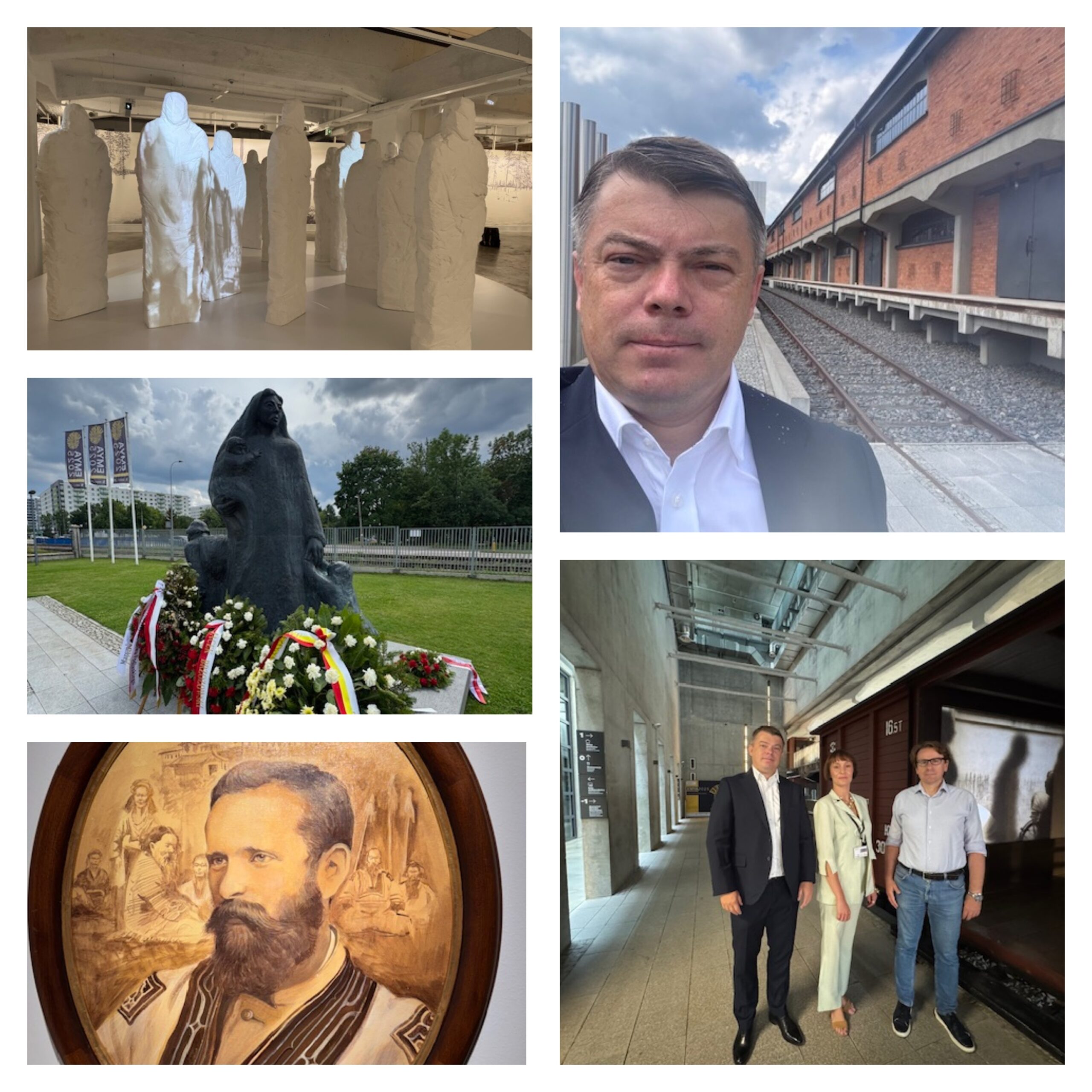
A meeting between the President of the Poland-Japan Foundation, Radosław Tyszkiewicz, and the Director of the Museum, Wojciech Śleszyński, took place at the Sybir Memorial Museum in Białystok. The discussions concerned activities related to Japan to date and plans to strengthen cooperation in the areas of education, culture, and commemoration of shared history. Possibilities for implementing joint projects that will promote knowledge about Polish-Japanese relations and strengthen lasting ties based on dialogue and mutual respect were also discussed.
The Sybir Memorial Museum, opened in 2021, is a unique institution dedicated to the fate of Poles and other nations who, from the end of the 16th century until the mid-20th century, were enslaved and deported deep into Russia and later the Soviet Union. The facility is housed in a historic building of a former military warehouse—a particularly symbolic place from which transports of those deported to Siberia departed in 1940–1941 and in 1944. The Museum’s collection includes approximately 5,000 exhibits, including those related to Japan, such as a photograph of Polish Siberian children rescued thanks to Japan’s assistance and Bronisław Piłsudski. For its innovative narrative and educational activities, the Museum has been honored with, among others, the prestigious Luigi Micheletti Award and previously the Council of Europe Museum Prize.
The institution actively develops relations with Japanese organizations and institutions, recalling shared historical experiences. In 2024, a delegation from the Museum participated in ceremonies in Japan marking the 100th anniversary of the evacuation of Polish children from Siberia, visiting, among others, museums in Tokyo, Tsuruga, Osaka, and Kobe, as well as sites commemorating the “Siberian children.” In the same year, a meeting was held in Białystok with representatives of the Association of Residents of the Chishima and Habomai Islands. The topic of the discussions was the tragic fate of Japanese people deported after World War II from the Kuril Islands and their experiences in Soviet internment camps.