History of Poland-Japan bilateral relations

Historical contacts between Poland and Japan date back to the 16th century, when Polish Jesuit missionaries first arrived in Japan. Despite the long geographical distance, the two countries gradually developed bilateral relations, which were interrupted by World War II, but later resumed. Cooperation between Poland and Japan has always been based on common values and mutual respect.
The history of Polish-Japanese relations dates back to the 15th century, when Poles first learned about the existence of Japan from Marco Polo's work "Description of the World". Direct contact was limited due to significant geographical distances and a lack of direct political links. The first meeting took place in 1585, when four Catholic delegates from Japan went to Rome, where they met with the Polish bishop Bernard Maciejowski, to whom they gave a Japanese translation of a fragment of one of the psalms (found in Krakow in 2000). In the 16th and 17th centuries, Jesuit missionaries conducted missionary activities in Japan. The first Pole in Japan was the Jesuit Wojciech Męciński, who arrived in 1642 during the period of religious persecution, but was captured, tortured and died a martyr's death.
Further contacts took place in the 19th century, when Poland was partitioned by Austria, Russia and Germany. The first Japanese to visit Poland was Major Yasumas Fukushima, who travelled the Berlin-Vladivostok route on horseback between 1892 and 1893, establishing contacts with Polish independence activists and exiles in Siberia. At the turn of the 19th and 20th centuries, two Polish exiles from Siberia, Bronisław Piłsudski (brother of Marshall Józef Piłsudski) and Wacław Sieroszewski, came to Japan, where they engaged in ethnological research of the Ainu on Hokkaido. During the Japanese-Russian War (1904-1905), Poles became interested in Japan due to the hopes of defeating Russia and regaining independence. During this time, Roman Dmowski and Józef Piłsudski visited Japan establishing contacts and engaging in improving the conditions of internment of 4,658 Poles who were detained in Japan as soldiers of the defeated Russian army.
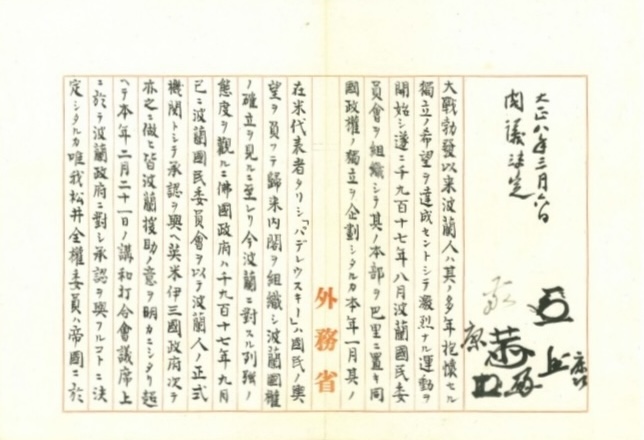
Diplomatic relations between Poland and Japan were established in 1919, after the end of World War I and Poland's independence. The decision was made by the Japanese government on 6 March 1919 and announced on 22 March at the ongoing peace conference in Paris. The first Japanese embassy in Poland was opened in Warsaw, and the Polish embassy in Japan in Tokyo. In 1937, the envoys were elevated to the rank of embassies. Between 1920 and 1922, Japan helped Polish orphans in Siberia by transporting 765 children to Japan, which were later handed over to Poland. Since 1930, Polish Franciscans have been active in Japan, including St. John Paul II. Maksymilian Kolbe and Father Zenon Żebrowski, conducting charity activities and founding a monastery in Nagasaki.
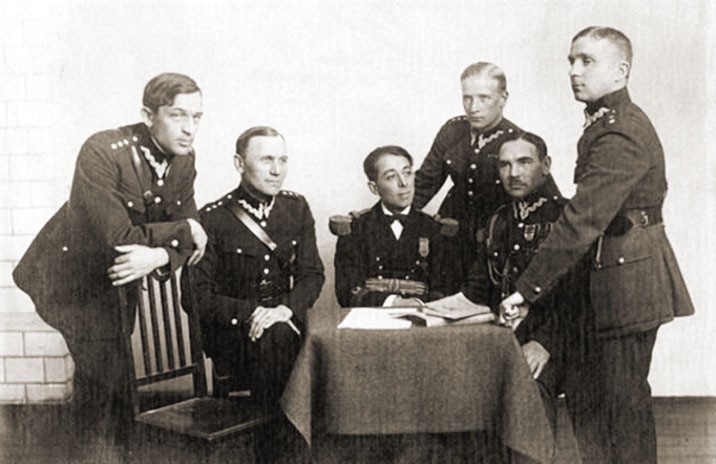
In the 1930s. In the 1960s, Polish-Japanese relations were shaped in the context of political and economic changes on the international arena. Poland tried to remain neutral against the growing threat from the Third Reich and the Soviet Union, and Japan intensified its expansion in East Asia. At that time, relations focused on developing military cooperation, especially in the field of cryptology and intelligence. During World War II, Polish-Japanese relations did not play a significant role, as both countries were on opposite sides of the conflict. As an Allied member, Poland fought against the Axis powers, including Japan. This situation resulted in a complete breakdown of bilateral diplomatic relations.
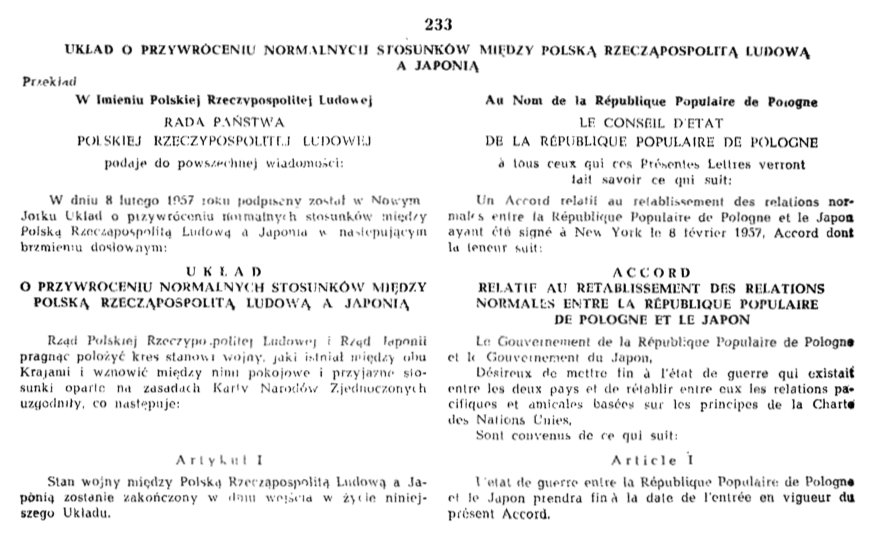
In the years 1945-1989, Polish-Japanese relations were characterized by gradual development. After the end of World War II, Poland came under the influence of the Soviet Union, and Japan, after capitulation, was subject to American occupation. In the first post-war years, relations between Poland and Japan were limited, mainly due to the different political context. However, as international tensions eased, relations began to develop, especially in the field of trade. In 1957, Poland and Japan established official diplomatic relations, which opened up new opportunities for cooperation. In the 1960s and 1970s, there was an increase in trade and the development of cultural and scientific contacts. Nevertheless, Poland and Japan maintained relatively limited relations, due to differences in foreign policy and strategic alliances.

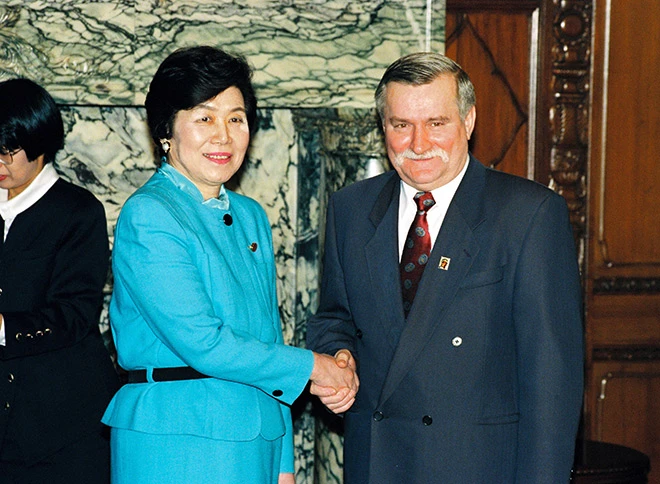
Since 1989, Polish-Japanese relations have experienced dynamic development, covering various areas of cooperation. After the political transformation in Poland and the collapse of the communist/socialist system, Polish-Japanese relations began to develop more intensively. Trade and investment increased, and both countries sought opportunities for cooperation in technological, scientific and cultural fields. Economic cooperation has become one of the main elements of relations, with the increase in investments of Japanese companies in Poland and the growing presence of Polish products on the Japanese market.

Join the newsletter
and stay up to date

The Polish-Japanese Foundation (FPJ) works for cooperation and development of mutual relations between entities and residents from both countries.

© 2024 Poland-Japan Foundation